
How was your overall experience with being a PsyHack mentor?
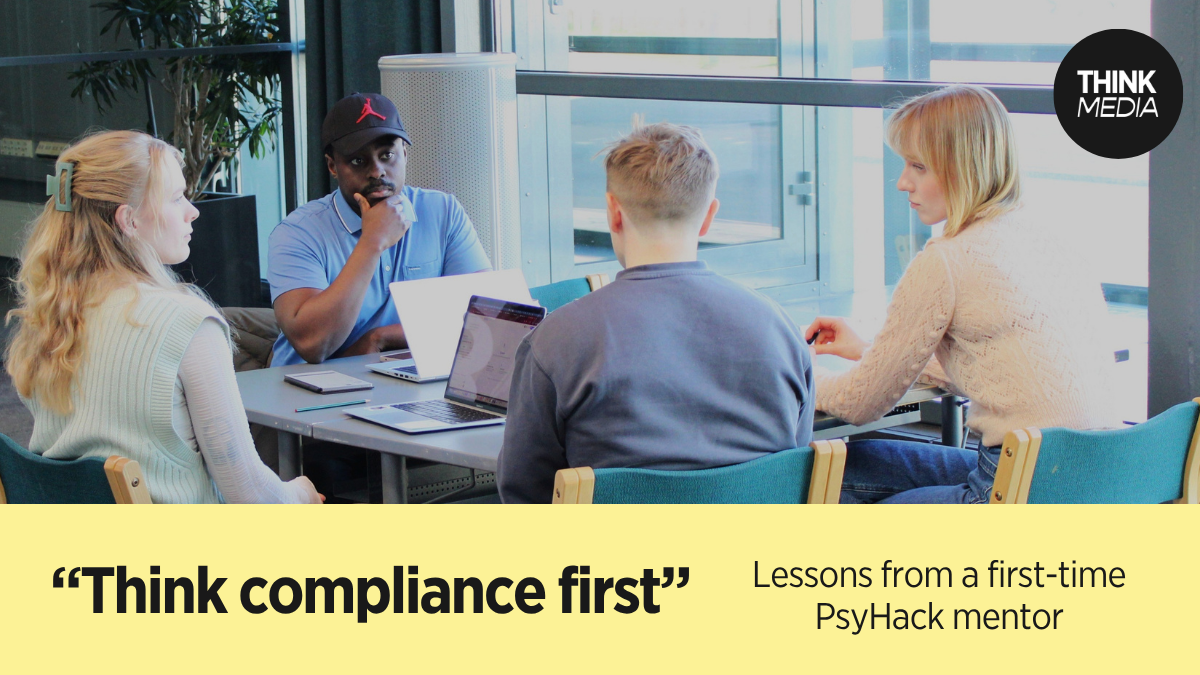
My overall experience was really good. Sometimes when you are working in a bubble, you may not know who might be able to use the things that you're working on, so interacting with the could-be potential users of LUMI AI Factory’s services was really interesting. Hearing the PsyHack participants’ thoughts and how they could leverage LUMI AIF’s infrastructure was eye-opening.
Before the PsyHack weekend, did you have any expectations regarding the teams’ ideas?
I really went in open-minded. I didn’t know how diverse the group of participants would be, and would PsyHack itself be targeted more to students or entrepreneurs, but then at the weekend, I was happy to see that the participant group was quite diverse.
How was your approach to mentoring the teams?
The background I came to PsyHack with was through my experience with various projects within the LUMI AI Factory and CSC at large. One of them has been EUSAiR, which is the European Union AI sandbox. Within that project, we deal with AI regulations, going through AI governance and looking through different AI systems to check how compliant they are with the AI Act.
Most of the PsyHack teams’ ideas were from the point of view of psychology, and so they weren’t purely medical but more in a grey area. When handling AI systems, we need to know which system it is, because the systems have different requirements. For example, if you call an AI assistant a medical tool, you need to meet a lot of requirements.
As I was interacting with the PsyHack teams, I told them “now that you have this idea, you need to keep the AI Act in mind”.
During the mentoring I also went through data, as most of the teams’ ideas had to do with collecting it one way or another. I reminded the teams that they need to incorporate GDPR in their solution – it should be there by design, right from the start, when thinking about who will be the solution’s end user, and how it will impact them in terms of data.
At LUMI AI Factory, when we work with startups and SMEs, that’s the first step we go through – how compliant their AI system is, is it high-risk, etc. So that was my focus with the PsyHack teams.
All of the teams’ ideas were brilliant, and potential user cases for LUMI AI Factory.
When you were working with the teams, did they have any particularly difficult questions for you?
One of the most difficult questions – although it may seem easy and simple – was “is this doable, and how long would it take?”.
What was your answer to that?
It depends how the idea is classified. If it’s a high-risk idea, there are many requirements that need to be fulfilled (in terms of data collection, GDPR, and compliance to the AI Act). To the question “can it be done?” I said yes to every team – it’s just a matter of time.
Were there any other repeated questions from the teams?
At the beginning when I introduced myself and told the teams about LUMI AI Factory’s services, the participants wondered if the services are really free, and who can access them. If you’re a student or part of a startup or SME (Small and Medium-sized Enterprise), you can come and try LUMI AIF’s services out for free. For large companies, we offer our services for a competitive price.
From your point of view, what kind of potential did you see with the teams’ ideas?
A few teams wanted to leverage Large Language Models (LLMs), which in my point of view are something really popular right now. I could immediately tell that these ideas could be very good user cases for us at LUMI AI Factory.
Two teams were a bit out of scope from the normal. One wanted to utilise human resources, which was surprising. The other idea was about how smart watches collect data and tell you about your sleep – the team wanted to have a more user-friendly approach to improving the watch users’ sleep, and make the process more like a conversation, instead of the watch just providing a success percentage after each night’s sleep.
This one’s a bit out of the box: if you yourself were to participate in a hackathon, what kind of an idea would you like to develop?
For me, I’m not a native Finn, so I've had to go through immigration. Sometimes when you call the office, you’re waiting in line for your turn for a long time, not knowing how long it’s gonna take. I’d like to come up with an idea that would help people know the best time to call and actually get through, without waiting indefinitely.
I’m curious about your job at LUMI AI Factory – what exactly does it entail?
I work primarily in the AI support and training team, where we help customers bring and run their AI jobs effectively on HPC (High-Performance Computing) systems. We’re at the front line of the interface with our customers. Some clients come to us without any knowledge of HPC, so we guide them through the process. For those who already have some experience, we support them along the way and help them optimise their workflows.
There are different ways of working with clients – we might deal with code optimisation, work directly on the HPC systems, or support topics such as Trustworthy AI. We also provide various kinds of training to our customers.
My other task is coordinating data access and integration within the LUMI AI Factory.
Let’s bring it back to PsyHack with my last question! How could LUMI AIF’s services help hackathon participants who want to take their idea forward?
The experts in our team have a lot of experience dealing with different kinds of projects, so that’s one thing that can be leveraged. The infrastructure is already available, so if you have an idea, our dedicated team can guide you through for free, and support you along the way. On top of skill and expertise consultations and the available expertise, the hackathon participants could also utilise the different multi-disciplinary trainings available, if they would like to strengthen or deepen their expertise in the AI, machine learning, or high-performance computing workflows.
LUMI AI Factory was the official partner for PsyHack 2026, which was organised 10-12 April 2026 at Terkko Health Hub, Helsinki.
LUMI AI Factory is a leading-edge service infrastructure and expert support centre designed to accelerate AI innovation across Europe. LUMI AIF helps startups, SMEs and researchers with hands-on expert support, tailored training, and advanced computing resources. The Factory’s services are free for students, startups and SMEs.



.png)
.png)


%20(1)-min.jpg)


.png)


.jpg)


